The Terminal Board Has Its Own ID Chip — and It Talks to the VAIC
One detail that surprises a lot of maintenance techs the first time they hit it: the TBAI terminal board paired with an IS200VAICH1D isn't a passive piece of terminal strip. It carries a small read-only ID chip encoding its serial number, board type, revision, and JR/JS/JT connector location. The VAIC interrogates that chip on startup, and if what it reads doesn't match what the card expects, it raises a hardware incompatibility fault — even though both the VAIC and the terminal board may be completely healthy. If you get this fault right after a card or terminal board swap, that's where to look before ordering another replacement.
Three Kinds of Faults, Three Different Root Causes
-
Hardware limit fault: fixed, non-configurable high/low thresholds on each input. Exceeding them stops that channel from being scanned — usually a sign of an open or shorted field circuit, not a card defect.
-
System limit fault: configurable alarm thresholds set up in the application, used to flag process conditions. This is almost always a process or configuration issue rather than a hardware problem.
-
TMR voting deviation: in a Triple Modular Redundant system, if one VAIC's reading for a channel drifts from the voted median beyond a set limit, that channel is flagged individually. It's an early warning for a developing problem in one signal path — check that specific transducer and wiring run before pulling any of the three cards.
Knowing which of these three you're looking at before ordering a replacement card will save you from swapping good hardware.
What the Card Does
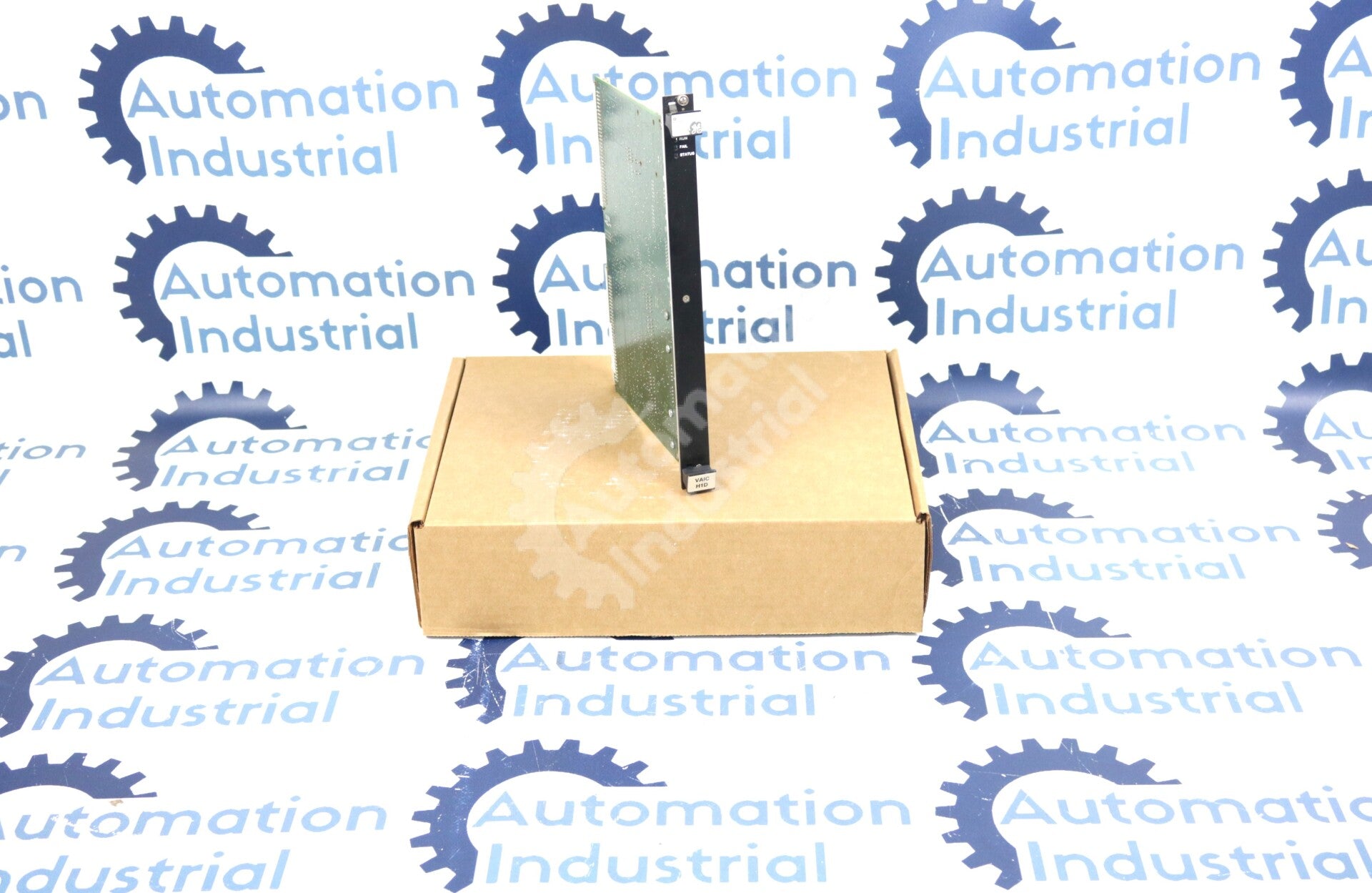
The IS200VAICH1D is a VME Analog Input/Output card in the Mark VI processor rack: 20 analog inputs, 4 analog outputs, with onboard signal conditioning, multiplexing, and A/D and D/A conversion. Field wiring lands on the TBAI terminal board, not the card; the terminal board connects to the VAIC by cable, and the VAIC pushes digitized readings across the VME backplane to the VCMI communications card for the controller.
Why H1D Specifically
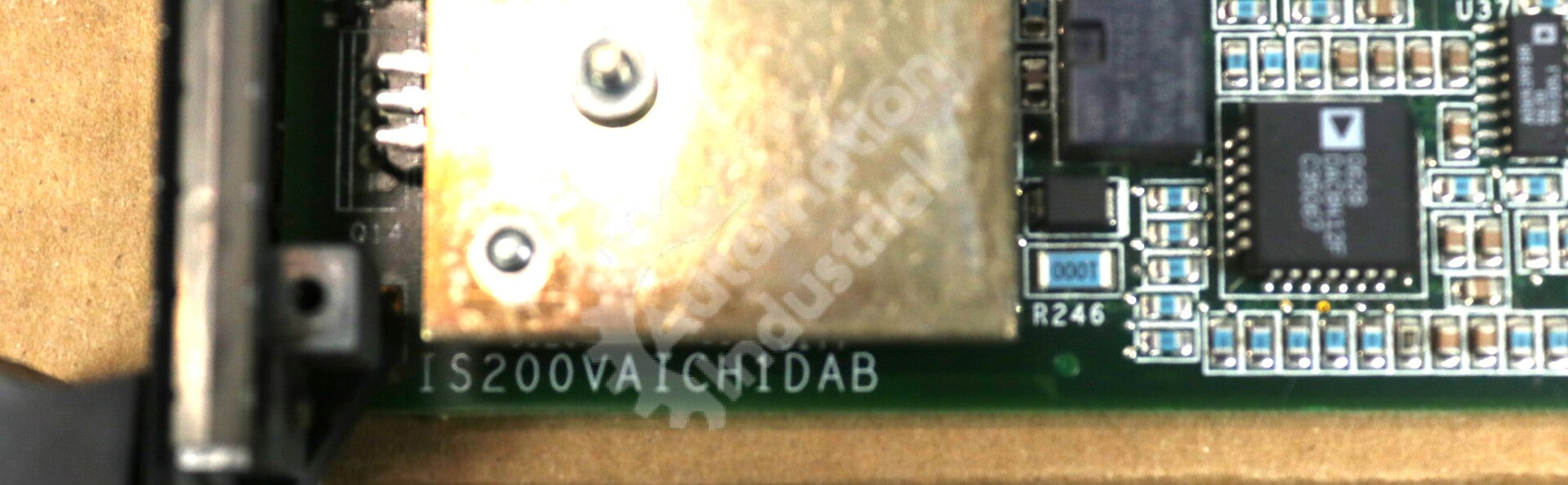
The H1D generation supports higher output loop loads than the earlier H1B/H1C generation — up to roughly 800 Ω on a 20 mA output over 1,000 ft of #18 wire, versus 500 Ω for the earlier boards — and it requires a TBAIH1C-or-later terminal board, or any STAI revision. Installing an H1D card against an old TBAIH1B or DTAI terminal board is a generation mismatch, and is one of the more common causes of the hardware incompatibility fault described above. The AB suffix on this specific unit (IS200VAICH1DAB) marks its revision; always confirm against the physical label. Our GE Speedtronic part number decoder covers what every segment of the number means.
Compressor Protection Logic
VAIC firmware also runs gas turbine compressor stall detection at 200 Hz off the first four analog inputs, using a two- or three-transducer algorithm depending on turbine size, and can trip a shutdown signal to the controller if a stall condition is detected. Nuisance trips are worth chasing at the pressure transducers first.
Related Boards
STAI or TBAIH1C-and-later terminal boards, and the VCMI card that carries data to the controller, are the typical companions to this card. See our Mark VI IS200 boards collection for the rest of the panel's spares.
Include This in Your RFQ
- Full part number and suffix (IS200VAICH1DAB)
- Terminal board currently installed
- Turbine model, panel type (simplex/TMR), and site
- Quantity and urgency
Request a Quote
We quote every order individually rather than publishing a checkout price. Submit your part number and timeline through Request a Quote and expect DDP pricing within 24 hours. Worldwide shipping, purchase orders accepted.
General Information about the Product |
Part Number |
IS200VAICH1D Mark VI IS200 |
Description |
IS200VAICH1D By IS200VAICH1DAB VME Analog Input Card Mark VI IS200 |
Condition |
used Cleaned and Tested. With 1 Year Warranty. |