

Envío exprés mundial • Se envía desde EE. UU. • Envío gratis

Seguro y Protegido • Se aceptan órdenes de compra

Productos Genuinos • Compatibilidad Garantizada • Envíos Internacionales

Sin Pagos Extra Requeridos • Sin Costos Adicionales
Los aranceles, impuestos, tasas y todos los cargos aplicables están incluidos. La entrega a domicilio se realiza bajo los términos de Entrega con Derechos Pagados (DDP). Todos los envíos cuentan con seguimiento y seguro.
La entrega puerta a puerta se proporciona bajo los términos de Entrega con Derechos Pagados (DDP), con seguimiento completo y cobertura de seguro
Gestionamos todas las importaciones y despachos de aduana a nivel mundial. Todas las tarifas, aranceles, impuestos y tasas aduaneras están incluidos. Sin cargos adicionales en la entrega.
Aranceles, todos los impuestos, derechos y tasas están incluidos.
No hay costos adicionales ni pagos extras requeridos. Todos los envíos cuentan con seguimiento y seguro. Los aranceles, tarifas, impuestos y cargos de aduana están incluidos. Realizamos envíos DDP a través de UPS, FedEx, DHL, USPS, mensajerías, reexpedidores o el transportista de su elección.
Descripción
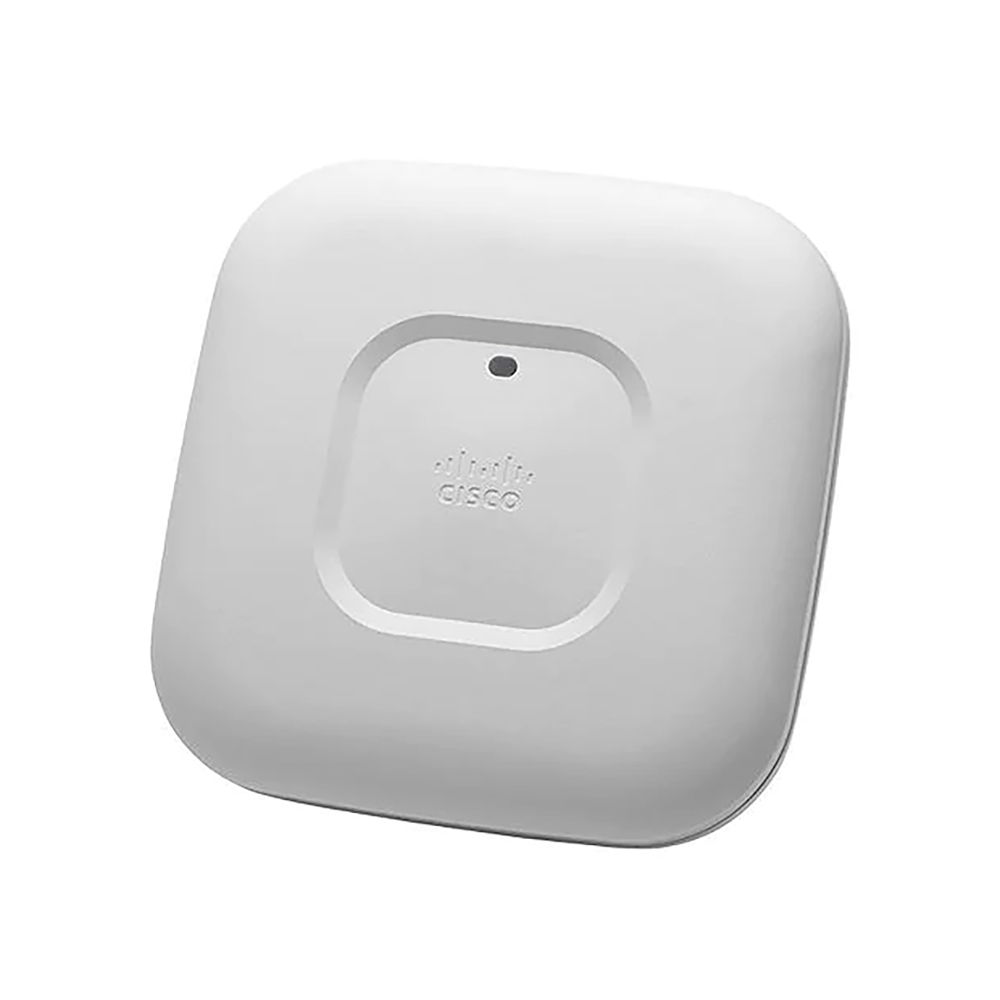
Aironet AP2702I-UXK9 Access Point Overview
The Cisco AIR-AP2702I-UXK9 is a high-performance wireless access point from the Cisco Aironet 2700 Series, designed to provide reliable connectivity with 802.11ac technology. It features CleanAir technology to automatically mitigate interference, ensuring optimal network performance. Equipped with 3x4 MU-MIMO for enhanced multi-user throughput, this access point operates on both 2.4 GHz and 5 GHz frequency bands, offering a maximum data rate of 1.3 Gbps. The internal antennas and modular design allow for flexible deployment, making it ideal for various business environments. Shop Cisco Wireless APs like the Air-AP2702I-UXK9 for robust, adaptable, and efficient wireless solutions.
Supported Accessories
Accessory |
Model |
| Mounting Bracket | AIR-AP-BRACKET-1 |
| Power Injector | AIR-PWRINJ6= |
| Spare Power Supply | PWR-C2-640WAC= |
Compare with similar items
Model |
Differences |
AIR-AP3702I-UXK9 |
Higher throughput, advanced security features |
AIR-AP1702I-UXK9 |
Lower data rates, fewer antennas |
AIR-AP1852I-UXK9 |
Latest 802.11ac Wave 2 features, more advanced hardware |
Specifications
AIR-AP2702I-UXK9 Specifications |
||||||||
| Software | Cisco Unified Wireless Network Software Release 7.6MR2 or later | |||||||
| Supported wireless LAN controllers |
● Cisco 2500 Series Wireless Controllers, Cisco Wireless Controller Module for ISR G2, Cisco Catalyst 3650 Series Switches |
|||||||
|
802.11n version 2.0 (and related) capabilities |
● 3x4 MIMO with three spatial streams● Maximal ratio combining (MRC) ● 802.11n and 802.11a/g beamforming● 20- and 40-MHz channels ● PHY data rates up to 450 Mbps (40 MHz with 5 GHz) ● Packet aggregation: A-MPDU (Tx/Rx), A-MSDU (Tx/Rx) ● 802.11 dynamic frequency selection (DFS) ● Cyclic shift diversity (CSD) support |
|||||||
| 802.11ac Wave 1 capabilities | ● 3x4 MIMO with three spatial streams ● MRC ● 802.11ac beamforming ● 20-, 40-, and 80-MHz channels ● PHY data rates up to 1.3 Gbps (80 MHz in 5 GHz) ● Packet aggregation: A-MPDU (Tx/Rx), A-MSDU (Tx/Rx) ● 802.11 DFS ● CSD support |
|||||||
|
Maximum number of nonoverlapping channels |
2.4 GHz ● 802.11b/g: ◦ 20 MHz: 3 ● 802.11n: ◦ 20 MHz: 3 |
5 GHz ● 802.11a: ◦ 20 MHz: 21 ● 802.11n: ◦ 20 MHz: 21 ◦ 40 MHz: 9 ● 802.11ac: ◦ 20 MHz: 21 ◦ 40 MHz: 9 ◦ 80 MHz: 5 |
||||||
| Maximum transmit power | 2.4 GHz ● 802.11b ◦ 22 dBm, 3 antennas ● 802.11g ◦ 22 dBm, 3 antennas ● 802.11n (HT20) ◦ 22 dBm, 3 antennas |
5 GHz ● 802.11a ◦ 23 dBm, 4 antennas ● 802.11n (HT20) ◦ 23 dBm, 4 antennas ● 802.11n (HT40) ◦ 23 dBm, 4 antennas ● 802.11ac ◦ non-HT80: 23 dBm, 4 antennas ◦ VHT20 23 dBm, 4 antennas ◦ VHT40: 23 dBm, 4 antennas ◦ VHT80: 23 dBm, 4 antennas ◦ VHT20-STBC: 23 dBm, 4 antennas ◦ VHT40-STBC: 23 dBm, 4 antennas ◦ VHT80-STBC: 23 dBm, 4 antennas |
||||||
| Available transmit power settings | 2.4 GHz ● 22 dBm (160 mW) ● 19 dBm (80 mW) ● 16 dBm (40 mW) ● 13 dBm (20 mW) ● 10 dBm (10 mW) ● 7 dBm (5 mW) ● 4 dBm (2.5 mW) ● 2 dBm (1.25 mW) |
5 GHz ● 23 dBm (200 mW) ● 20 dBm (100 mW) ● 17 dBm (50 mW) ● 14 dBm (25 mW) ● 11 dBm (12.5 mW) ● 8 dBm (6.25 mW) ● 5 dBm (3.13 mW) ● 2 dBm (1.56 mW) |
||||||
| Integrated antenna | ● 2.4 GHz, gain 4 dBi, internal omni, horizontal beamwidth 360° ● 5 GHz, gain 4 dBi, internal omni, horizontal beamwidth 360° |
|||||||
| External antenna (sold separately) | ● Certified for use with antenna gains up to 6 dBi (2.4 GHz and 5 GHz) ● Cisco offers the industry's broadest selection of antennas, delivering optimal coverage for a variety of deployment scenarios |
|||||||
| Interfaces | ● 2x10/100/1000BASE-T autosensing (RJ-45) ● Management console port (RJ-45) |
|||||||
| Indicators | ● Status LED indicates boot loader status, association status, operating status, boot loader warnings, boot loader errors |
|||||||
| Dimensions(W x L x H) | ● Access point (without mounting bracket): 8.69 x 8.69 x 1.99 in. (22.1 x 22.1 x 5.1 cm) | |||||||
| Weight | ● 2.2 lb (1.0 kg) | |||||||
| Environmental | Cisco Aironet 2702i ● Nonoperating (storage) temperature: −22° to 158°F (-30° to 70°C) ● Nonoperating (storage) altitude test: 25˚C, 15,000 ft. ● Operating temperature: 32° to 104°F (0° to 40°C) ● Operating humidity: 10% to 90% percent (noncondensing) ● Operating altitude test: 40˚C, 9843 ft.Cisco Aironet 2700e ● Nonoperating (storage) temperature: −22° to 158°F (-30° to 70°C) ● Nonoperating (storage) altitude test: 25˚C, 15,000 ft. ● Operating temperature: −4° to 122°F (-20° to 50°C) ● Operating humidity: 10% to 90% (noncondensing) ● Operating altitude test: 40˚C, 9843 ft. |
|||||||
| System memory | ● 512 MB DRAM ● 64 MB flash |
|||||||
| Input power requirements | ● AP2700: 44 to 57 VDC ● Power supply and power injector: 100 to 240 VAC; 50 to 60 Hz |
|||||||
| Power draw | ● AP2700: 15W Note: When deployed using a Power over Ethernet (PoE) specification, the power drawn from the power sourcing equipment will be higher by some amount dependent on the length of the interconnecting cable. |
|||||||
| Powering options | ● 802.3at PoE+ ● Enhanced PoE ● Cisco AP2700 power injectors (AIR-PWRINJ4=) ● Cisco AP2700 local power supply (AIR-PWR-C= or AIR-PWR-D=) Note: If 802.3af PoE is the source of power, the access point will dynamically shift from 3x4 to 3x3 and come up under PoE. |
|||||||
| Warranty | Limited lifetime hardware warranty | |||||||
| Compliance standards |
◦ UL 60950-1 Authentication Protocol Version 2 (MSCHAPv2) ◦ Protected EAP (PEAP) v0 or EAP-MSCHAPv2 |
|||||||
Quality Certifications


Get More Information
Warranty
100% Low Price Guarantee
Network-switch.com provides high-quality products at low wholesale prices
100% Quality Assurance
All items are ORIGINAL and GENUINE only.
Item conditions are "New Sealed". They are fully tested by Cisco-certified Engineers.
Free CCIE Technical Support
Our FREE Cisco CCIE Expert Consultancy Support is over the phone, by chat, by email or by login remotely.
100% Money Back Guarantee
You can contact our customer service team to exchange or return any product that you bought from us.
Flexible Secure Payment & Shipment
Verified authorization: Mcafee Secure, VeriSign Secured
Envío
Sí, enviamos a todo el mundo. Ofrecemos envío GRATUITO o, si desea envío exprés, puede elegir el servicio y se aplicarán los costos de envío, los cuales se agregarán al finalizar la compra.
No, los impuestos están incluidos y con envío gratuito.
Utilizamos las principales empresas de transporte y socios de mensajería locales. Se le pedirá que seleccione un método de entrega durante el proceso de pago.
Sí, ofrecemos envío gratuito a su país.
Producto
Siempre nos esforzamos por asegurar que nuestros clientes amen nuestros productos, pero si necesitas devolver un pedido, estaremos encantados de ayudarte. Simplemente envíanos un correo electrónico directamente y te guiaremos a través del proceso.
Otro
¡Puede contactarnos a través de nuestra página de contacto! Estaremos encantados de ayudarle.
¿Alguna pregunta?
Si aún no hemos respondido a tu pregunta, puedes contactarnos a continuación y te responderemos lo antes posible.